
physical info!
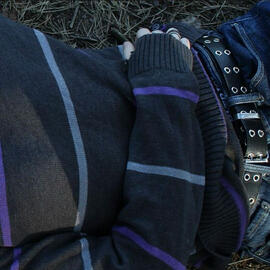
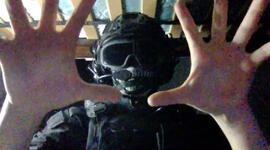
european, tall (6'1/183cm), straight black hair styled in a wolfcut, pale skin, freckles, raven black eyes, moles on his face. lanky, bony but slightly muscled. tattoos on his body. snakebites, tongue and nose ring piercings. scar on his top lip, and scars from fights on his body. half-lidded eyes, slightly crooked button up nose, hollow cheeks.
mental & personnality!
sarcastic, smug, indecisive, suggestive, observant, cocky, affectionate, eccentric, controversial, funny, blunt, charismatic, nosy, possessive, jealous, arrogant, impatient.
has borderline personality disorder, ptsd, depression due to a traumatic childhood. he suspect adhd but never got it diagnosed.


random infos!
millie is left handed. he hates sports. his vision isn't that good but he refuses to wear glasses. he has the bad habit of smoking. millie is in a music band, as a drummer. he's a good skater and he likes doing grafitti. he speak both french and english.
favorite things!
his favorite color is green (#43A047). his favorite alcohol is vodka. his favorite music band is ICP, favorite song by them is Tilt-A-Whirl. favorite food is chinese jiaozi dumplings. favorite movie is La Haine. his favorite season is winter.

likes!
going to parties, mocking and taunting cops, his friends, playing the drums, winter/snow, horror movies, storms, black coffee, cats, feeling free, listening to music.
dislike!
cops and authority, liars, right wing people, being arrested, feeling abandonned, summer/sun, hot weather, people with no morals, his father, having a routine.
backstory!Millie Monroe Morison was born on September 17, 2001, in Argenteuil, France, to an American father and a French mother. His parents’ relationship was unstable from the beginning; his father struggled with alcoholism, while his mother had little desire to be a parent, and their financial circumstances offered little stability to begin with. Millie’s early childhood was defined by neglect and deprivation. He was frequently left to fend for himself, often malnourished and without the care or attention a child should have received. When he was four years old, his mother eventually abandoned the family altogether.Following her departure, Millie remained in the care of his father, though care was hardly what he received. His father had never wanted the responsibility of raising a child and became increasingly distant, volatile, and abusive. Not long after his mother left, he decided to move them back to the United States, settling in a poor neighborhood in Chicago, Illinois. With no other relatives willing or able to take him in, Millie grew up in an environment where neglect and violence were simply part of everyday life.As an only child, Millie learned from an early age that he could not rely on his father for much of anything. He became unusually independent out of necessity, figuring out how to feed himself, occupy himself, and deal with problems without expecting an adult to intervene. There was very little security in his childhood, but at five years old, while attending kindergarten, he met the person who would eventually become his closest and most enduring friend. That friendship became one of the few constants in his life, providing him with a sense of companionship and belonging he rarely found at home.As Millie grew older, the resentment he had carried since childhood began to manifest itself more openly. He developed a deep distrust of authority and had little patience for adults who attempted to control or discipline him. By his teenage years, that anger had evolved into increasingly reckless behavior. He stole, tagged police cars, got into fights, and deliberately pushed boundaries simply to see how far he could go. It did not take long for local police to recognize him, and Millie quickly earned himself a reputation as a delinquent.School was no easier. He struggled academically and treated education as little more than an inconvenience, often acting as though he could not care less about his grades or future. Beneath that indifference, however, was a stubborn determination not to become like his father. Millie knew exactly what he did not want his life to look like, even if he had no idea what he wanted instead, and that awareness eventually pushed him to make more of an effort than anyone expected from him.Throughout high school, Millie cultivated an attitude of seeming indifference: he acted as though nothing could hurt him and rarely allowed anyone to see how deeply he was struggling. His mental health became an increasingly significant obstacle, however, and eventually reached a point where he could no longer ignore it. He began seeing his school counselor and later sought professional help, attending therapy for several months. During this period, he was diagnosed with borderline personality disorder, post-traumatic stress disorder, attention-deficit/hyperactivity disorder, and depression.While the diagnoses gave some explanation to the patterns he had struggled with for years, they did not provide an instant solution. Recovery became a gradual process of learning to understand himself, manage his emotions, and confront parts of his past he had spent most of his life trying to bury.At eighteen, Millie finally left his childhood home. He found work with a music band and used the opportunity to establish a life of his own, moving into an apartment and gaining the independence he had wanted for years. The band quickly became more than a job; the people he met there became his closest friends and, eventually, the family he had never really had. For perhaps the first time in his life, Millie found himself surrounded by people who genuinely wanted him around. Through every stage of this transition, his childhood best friend remained by his side. Their relationship had survived everything else in his life, and the two remained exceptionally close into adulthood.At twenty-two, Millie lost his father to liver cancer.He rarely speaks about it and has never been particularly interested in revisiting the years they spent together. If anything, he prefers to leave the past where it belongs, even when moving forward proves more difficult than he would like to admit.His childhood shaped him in ways he cannot simply erase, but Millie has spent much of his adult life trying to build something separate from it; a life that belongs to him, surrounded by people he has chosen as his family rather than those he happened to be born into.